
Moteka is a Marseille based techno project focused on improvised live performance and studio production.
News
Studio
Live
Each set is fully improvised and never twice the same.
Music
Remix Moteka’s Tracks
MM2 EDIT
Every knob of the MicroMonsta 2, on one screen.
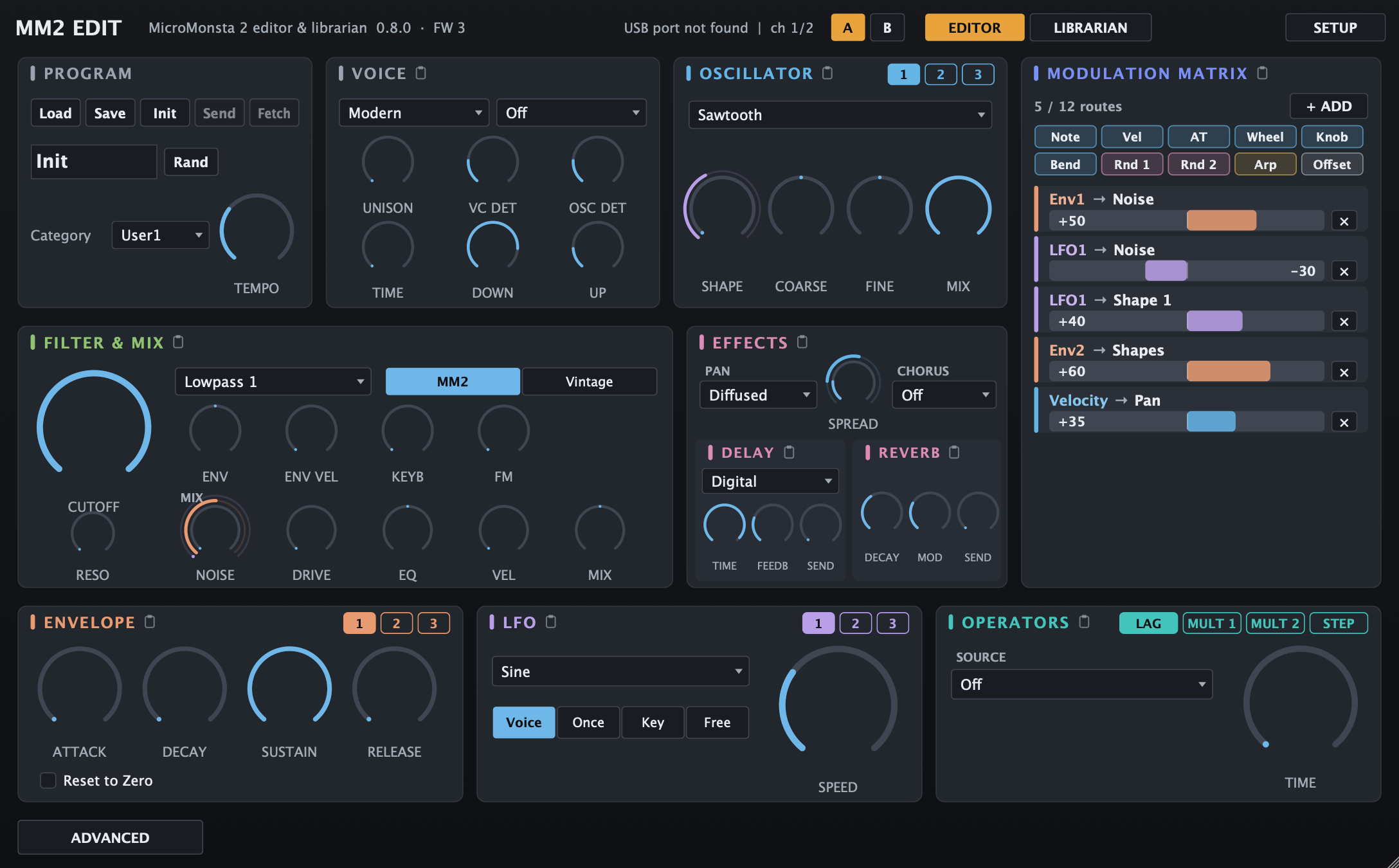
MM2 Edit turns the Audiothingies MicroMonsta 2 into a synth you program from your DAW. Oscillators, filter, envelopes, LFOs, operators, effects, the step modulator and the 16-step arpeggiator of both parts sit on one screen, with tabs instead of menu pages.
Modulation works like in a modern soft synth: drag an envelope, an LFO, the step modulator or velocity onto a knob and the route lands in the synth's matrix. A coloured ring around the knob shows the depth, drag it to adjust. The matrix lists every route in plain words.
Plug the MicroMonsta 2 in over USB and the plugin finds it. The librarian keeps three banks of programs, receives dumps from the synth, loads and saves .syx files and sends whole banks back. Your sounds are saved with the project and sent back to the synth when you reopen it. Firmware 3 and firmware 2 are both supported: the plugin detects which one your synth runs and adapts its screen, and v2 programs and banks load into a v3 synth.
Works with MicroMonsta 2 firmware 3 and 2.7+. Not affiliated with Audiothingies. On Windows, SmartScreen may warn: More info, then Run anyway.
Free forever. If MM2 Edit saves you some menu diving, buy me a coffee ↗
LEVAIN
Three knobs. Your mix rises.
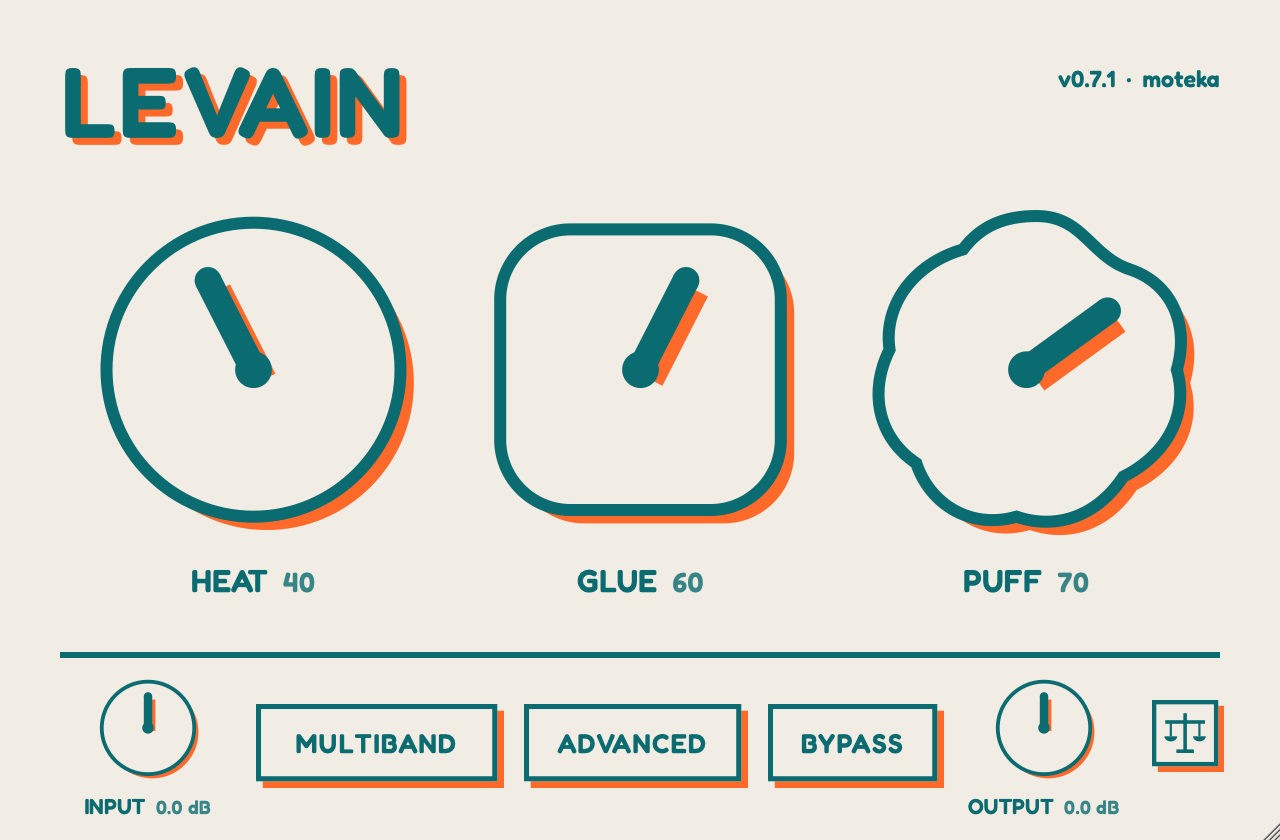 Hover any control in the plugin for help
Warmth, glue and inflation in one plugin. Turn up HEAT, GLUE and PUFF: the output level stays matched to the input, so you hear what changes, not just louder. Made for the mix bus and the master, light enough to run live.
- HeatParallel tube saturation. A second tube stage kicks in over the last quarter of the knob.
- GlueBus compression. Advanced opens threshold, ratio, attack and release, with a gain reduction meter.
- PuffInflation: louder at the same peak level, in one band or three.
- CompareThe scale icon keeps the output at the input's loudness, to A/B with Bypass at equal level.
Windows may show a SmartScreen warning for this new installer: click More info, then Run anyway.
Free forever. If Levain makes your mix rise, buy me a coffee ↗
TOASTY
One knob. Golden drums.
A drum bus in a toaster. Turn up HEAT and three stages work together. The output level is matched automatically, so louder never fools your ears. Designed for the drum bus, but works perfectly on anything.
- WarmthParallel tube saturation, from a light glow to burnt.
- GlueSlow-attack bus compression, 3 dB at most. The kick's transient passes, the body breathes.
- ClipA safety clipper holds peaks under -0.3 dBFS.
Windows may show a SmartScreen warning for this new installer: click More info, then Run anyway.
Free forever. If Toasty warms up your drums, buy me a coffee ↗
PINK HOLE
A bottomless reverb, driven by a single control.
A reverb with one gesture. Drag OPENING and size, diffusion, feedback and stereo spread move together, tuned by ear so every position is usable. Closed, it is a small room. Fully open, about a minute of tail.
- OpeningOne control for the whole space, from a small room to a bottomless tail.
- AdvancedSix parameters for fine-tuning: size, diffusion, spread, feedback, mod depth, mod rate. Moving Opening sets them again.
- SafeThe SAFE button swaps the drawing for a plain knob. Same control, same sound, a more neutral look.
Windows may show a SmartScreen warning for this new installer: click More info, then Run anyway.
Free forever. If Pink Hole makes your mixes bottomless, buy me a coffee ↗
MSIG
Read, edit and send rack DSP patches and algorithms from a Mac or a Linux PC.
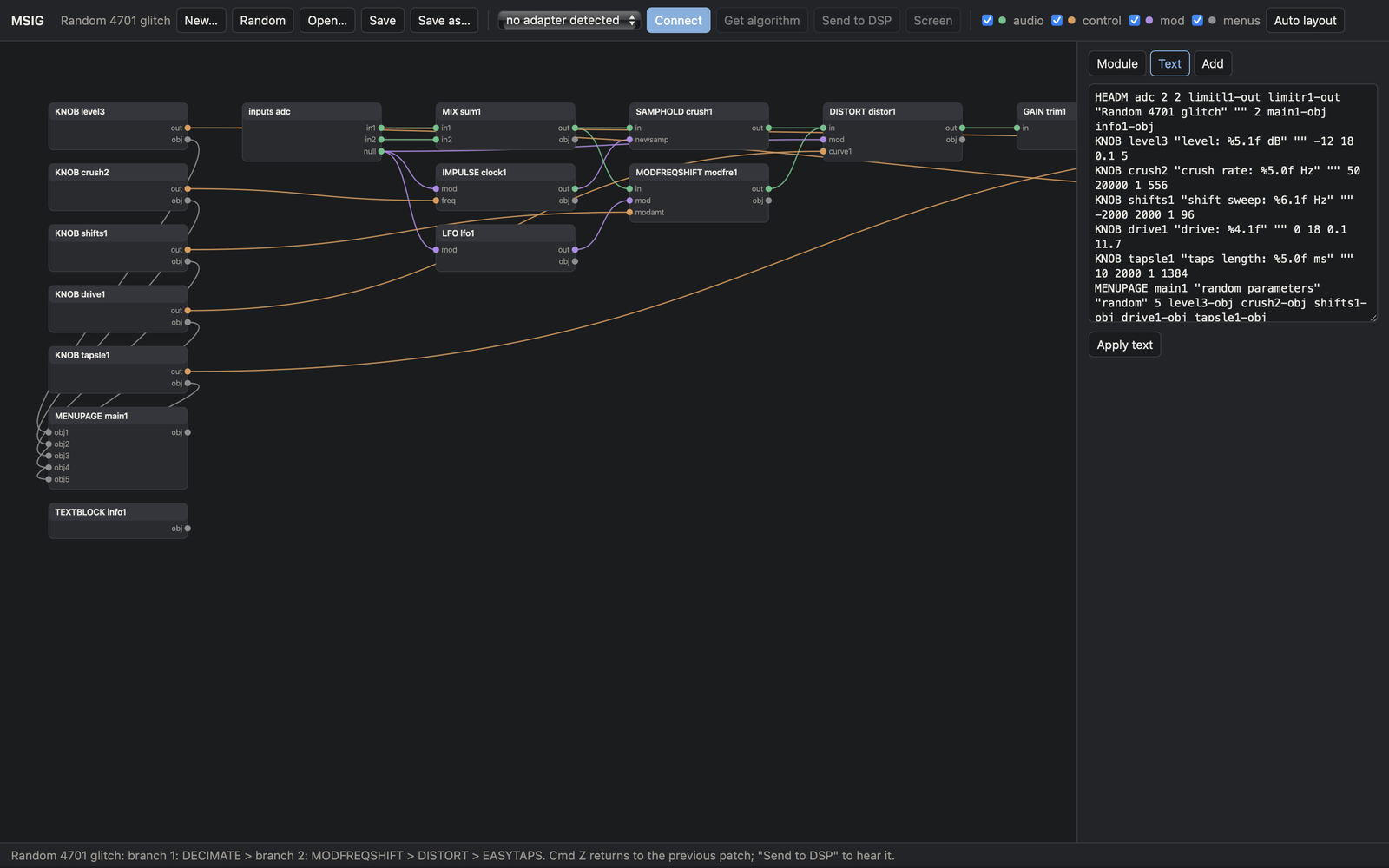
MSIG is an editor for modular DSP rack units: a native app on macOS, a browser-based editor on Linux. It opens and saves .sig files and exchanges algorithms and patches with the unit over RS-232 (SysEx, 115200 baud). The module list is read from your own unit, so modules and parameters match its firmware.
Hardware: a USB to RS-232 adapter (FTDI, Prolific or CH340) and a straight-through DB9 cable, not null-modem. Unit settings: RS-232 at 115200 baud, SysEx on, device ID 1.
macOS: signed and notarized by Apple. Linux: extract the archive and run ./install.sh; your user needs to be in the dialout group to use the serial port. The editor opens in your web browser.
Compatibility: tested only on my own DSP7000, from a Mac. The Linux version has not been tested with the hardware yet. Other units and models have not been tested.
DisclaimerMSIG is an independent project by Moteka. It is not associated with, endorsed by or supported by Eventide Inc., which is not responsible for any issue that may occur when using MSIG with its products. MSIG contains none of the manufacturer's software or data: the module list is read from your own unit. Provided as is, without warranty. Back up your unit's programs before sending anything to it.
Free forever. If MSIG brings your DSP rack back to life, buy me a coffee ↗
QUADRA
A four-voice groovebox for the original Game Boy.
- Keys
- Arrows = D-pad, X = A, Z = B, Enter = Start, Shift = Select. On a phone, press the buttons of the console.
- First steps
- Start on the title screen, then Start again to play the demo.
- Steps
- A sets a step. Hold A with Up or Down to change its sound, hold B with the D-pad to pick what to change.
- Views
- Select with Left or Right: grid, track, pattern, project (presets) and waves.
- Save
- Your patterns stay in this browser only.
- Emulator
- binjgb by Ben Smith, MIT licence.
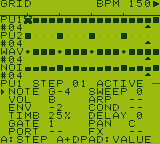
A step sequencer that runs on the Game Boy itself and plays its four sound channels directly. Every step carries its own sound: pitch, volume, envelope, timbre, gate, slide, sweep, arpeggio, condition and pan. No global instruments, no samples, just the chip.
- TracksFour tracks of 16 steps, each with its own length, speed, direction, shuffle, echo and step modulator. Polymeter comes for free.
- Scales14 scales and a root note filter every note you enter. A transposition sequencer moves marked steps every few bars.
- GenerateOne button writes a new melody in the chosen scale, keeping the sound of the track.
- Patterns48 slots per track, queued to the end of the loop, plus a snapshot to jump back and forth live.
- Presets8 built-in patterns: groove, house, breakbeat, chiptune and four old school Goa sets in Phrygian.
Sound examples
Three Goa sketches played by the ROM. Recorded from an emulator, no effects and no edits: only the loudness is levelled.
Four voices
Compatible with most GB emulators, on Windows, macOS or Android. Unzip, open Quadra.gb, and your patterns are kept in the save file.
Free forever. If Quadra gets your Game Boy dancing, buy me a coffee ↗